The Best Secular Homeschool Curriculum
By Jenni Sekine Updated
In this guide
- What is Secular Homeschooling?
- What is the difference between secular and religious homeschool?
- What are the Benefits of Secular Homeschooling?
- How to choose the right secular homeschool curriculum for your family
- How do secular homeschool curriculums handle topics like science and history?
- Can I teach my child about religion if we use a secular curriculum?
- How do I ensure socialization for my child in a secular homeschool setting?
- How do I handle state homeschooling regulations with a secular curriculum?
- Can secular homeschooling accommodate different learning styles?
- Homeschool is more than just curriculum and lessons at home.
- Leading Secular Homeschool Curriculums
- Supplementary Secular Resources and Tools
- Provide your child with an Inclusive, Well-rounded education through the Secular Homeschool curriculum.
After homeschooling our four dragons for over eight years, I know firsthand how overwhelming it can be to find a non-religious homeschool curriculum that aligns with your family’s educational goals. My experiences teaching our children in a secular homeschool environment are why I wrote this blog post for you and other homeschoolers seeking secular curriculum options.
I want to help you simplify the decision-making process by highlighting the benefits of secular homeschooling, outlining key criteria for selecting a curriculum, and providing detailed reviews of a few leading secular programs. Interested in homeschooling, but not sure where to start? Read our blog, “How to Start Homeschooling Today“.
Preparing for your kindergartener to start homeschooling? Please read our guide to secular homeschool kindergarten curriculum and resources!
Let’s geek out about secular curriculum together!
What is Secular Homeschooling?
Secular homeschooling refers to educating children at home without incorporating religious instruction or content into the curriculum.
The primary focus is providing a well-rounded, inclusive, evidence-based education that aligns with widely accepted educational standards and historical and scientific principles.
Secular homeschooling can be ideal for families seeking an education free from religious influence. It offers a comprehensive and balanced approach to learning that prepares students for a diverse and ever-changing world.
Here are some key characteristics of a secular homeschooling curriculum:
Neutral Content: Secular homeschool curriculums avoid religious instruction or teachings, ensuring that science, history, and literature are taught from a neutral, unbiased perspective.
Inclusivity: These curriculums emphasize cultural sensitivity and inclusivity, reflecting diverse perspectives and experiences.
Critical Thinking: Secular homeschool curriculums strongly emphasize students’ development of critical thinking skills, encouraging them to question, analyze, and form their conclusions based on evidence.
Scientific Inquiry: Secular curriculums adhere to scientific principles and methodologies, particularly in biology, chemistry, and physics, providing students with a solid foundation in scientific literacy.

What is the difference between secular and religious homeschool?
The difference between secular and religious homeschooling lies primarily in the inclusion or exclusion of religious content within the educational curriculum. Secular homeschooling is characterized by the absence of religious instruction. The curriculum is designed to be neutral, focusing on academic subjects without incorporating religious beliefs or teachings. This approach ensures that subjects like science, history, and literature are taught from a neutral perspective, emphasizing critical thinking and scientific inquiry. Secular curriculums often align with state and national educational standards, providing a comprehensive and inclusive education that reflects diverse perspectives and experiences.
On the other hand, religious homeschooling integrates religious beliefs and teachings into the educational curriculum. The content is designed to reflect the values and doctrines of a specific faith, aiming to instill these beliefs alongside academic education. Subjects are often taught in a way that aligns with the family’s religious worldview, which may influence the interpretation of scientific concepts and historical events. Religious homeschooling provides a spiritual foundation, reinforcing faith-based values and morals throughout the learning process. Families who choose religious homeschooling often benefit from a supportive community of like-minded individuals and access to educational materials produced by faith-based organizations.
In summary, the primary distinction between secular and religious homeschooling is whether or not religious content is included in the curriculum. Secular homeschooling offers a neutral, evidence-based education free from religious influence, while religious homeschooling combines academic learning with faith-based instruction and values. The choice between these approaches depends on the family’s educational goals, beliefs, and values.
What are the Benefits of Secular Homeschooling?
Secular homeschooling offers a range of benefits that make it an attractive option for many families. One of the primary advantages is the flexibility it provides in teaching diverse subjects. Parents can explore a broad spectrum of topics without the constraints of religious doctrines, ensuring that their children receive a well-rounded education that will prepare them for college. This approach allows for the inclusion of various worldviews, scientific theories, and historical perspectives, fostering a more comprehensive understanding of the world.
Another significant benefit is the emphasis on inclusivity and cultural sensitivity. Secular homeschool curriculums are designed to reflect and respect the diversity of human experiences, promoting an inclusive learning environment. This approach helps children develop empathy and respect for different cultures, traditions, and beliefs, preparing them to thrive in a multicultural society.
Focusing on critical thinking and scientific inquiry is a hallmark of secular homeschooling. These curriculums cultivate independent thought and problem-solving skills by encouraging students to question, analyze, and draw conclusions based on evidence. This emphasis on critical thinking prepares students to navigate complex issues and challenges academically and in everyday life.
Lastly, secular homeschooling avoids religious bias, ensuring that educational content is presented objectively. This neutrality allows children to form their own beliefs and opinions without the influence of religious ideologies. By providing an unbiased education, parents can support their children in developing a personal, well-informed worldview based on facts and evidence.
How to choose the right secular homeschool curriculum for your family
Choosing the best secular homeschool curriculum for your kids involves carefully evaluating various factors to ensure it aligns with your educational goals and meets your children’s needs. Firstly, You should consider the curriculum’s adherence to academic standards to make sure the material is comprehensive and appropriate for your student’s grade level.
Customizability and adaptability are key features for our family, as they allow parents to tailor the learning experience to their child’s unique learning style and interests.
Additionally, parents should seek out curriculums that provide ample resources and support, such as lesson plans, workbooks, and access to online communities or forums. Reading reviews and testimonials from other homeschooling families can provide valuable insights into the effectiveness and usability of the curriculum.
It’s beneficial to choose a curriculum that offers a variety of teaching methods, including hands-on activities, digital tools, and traditional reading materials, to keep learning engaging and dynamic.
Lastly, considering the availability of supplementary resources like online educational platforms, science kits, and educational games can enhance the learning experience. By thoroughly researching and considering these factors, you can build a secular homeschool curriculum that meets academic standards, prepares your child for college, and fosters a love for learning and critical thinking.

How do secular homeschool curriculums handle topics like science and history?
Secular homeschool curriculums approach subjects like science and history from a neutral, evidence-based perspective. They emphasize critical thinking, scientific inquiry, and an unbiased presentation of historical events and theories, free from religious influence.
Can I teach my child about religion if we use a secular curriculum?
Yes, you can incorporate religious education into your homeschooling if you choose to. A secular curriculum provides a neutral foundation for academic subjects, but you can supplement it with your own religious teachings and activities if desired.
How do I ensure socialization for my child in a secular homeschool setting?

Socialization can be achieved through various means, such as joining local homeschool groups, participating in extracurricular activities, sports teams, community events, and online forums. These opportunities allow children to interact with peers and develop social skills in a secular context.
How do I handle state homeschooling regulations with a secular curriculum?
It’s important to familiarize yourself with your state’s homeschooling regulations and requirements. Most secular homeschool curriculums are designed to meet or exceed these standards. Keeping thorough records of your child’s progress, including lesson plans, assignments, and assessments, can help ensure compliance.
Can secular homeschooling accommodate different learning styles?
Absolutely. Secular homeschool curriculums often offer a high degree of customizability and adaptability, allowing parents to tailor the learning experience to their child’s unique needs and preferences. This can include using various teaching methods, hands-on activities, digital tools, and project-based learning to engage different learning styles.
Homeschool is more than just curriculum and lessons at home.
At Dragon’s Hearth Farm, we deeply value community connection. Connecting with the community is incredibly important for homeschoolers! You can join local homeschool co-ops who meet for field trips or have a weekly meet-up with classes led by parents. Depending on your area, finding a secular homeschool co-op may be challenging, but they are out there! I found a couple of wonderful secular homeschool co-ops in Oklahoma for my family that were wonderful!
Your kiddos can make friends at their secular homeschool co-ops, learn alongside other kiddos, and begin to learn how to work within a community. Learning with others can boost your student’s social-emotional learning skills.
Plus, some children benefit from learning from other kids and teachers. Homeschooling within a community offers a diverse learning environment. Secular homeschool co-ops benefit parents, too! You can ask questions about resources and curriculum and get additional support from a community of parents who understand the joys and battles of homeschooling.
Leading Secular Homeschool Curriculums
Blossom and Root:
The Blossom and Root curriculum is a family favorite for our little dragons! It is heavily inspired by nature, music, art, and language arts. Our family has used the Blossom and Root early years, kindergarten, second-grade, and fourth-grade curriculums.
Blossom and Root is a less expensive curriculum option that offers summer sales. The curriculum and student workbooks are available online via PDF. You must print out your curriculum and workbooks, which could get expensive, or use your laptop/computer to access the curriculum daily. While printing each workbook, our family kept our teacher guides on my laptop and printed out all our student workbooks.
Math with Confidence Math Curriculum:

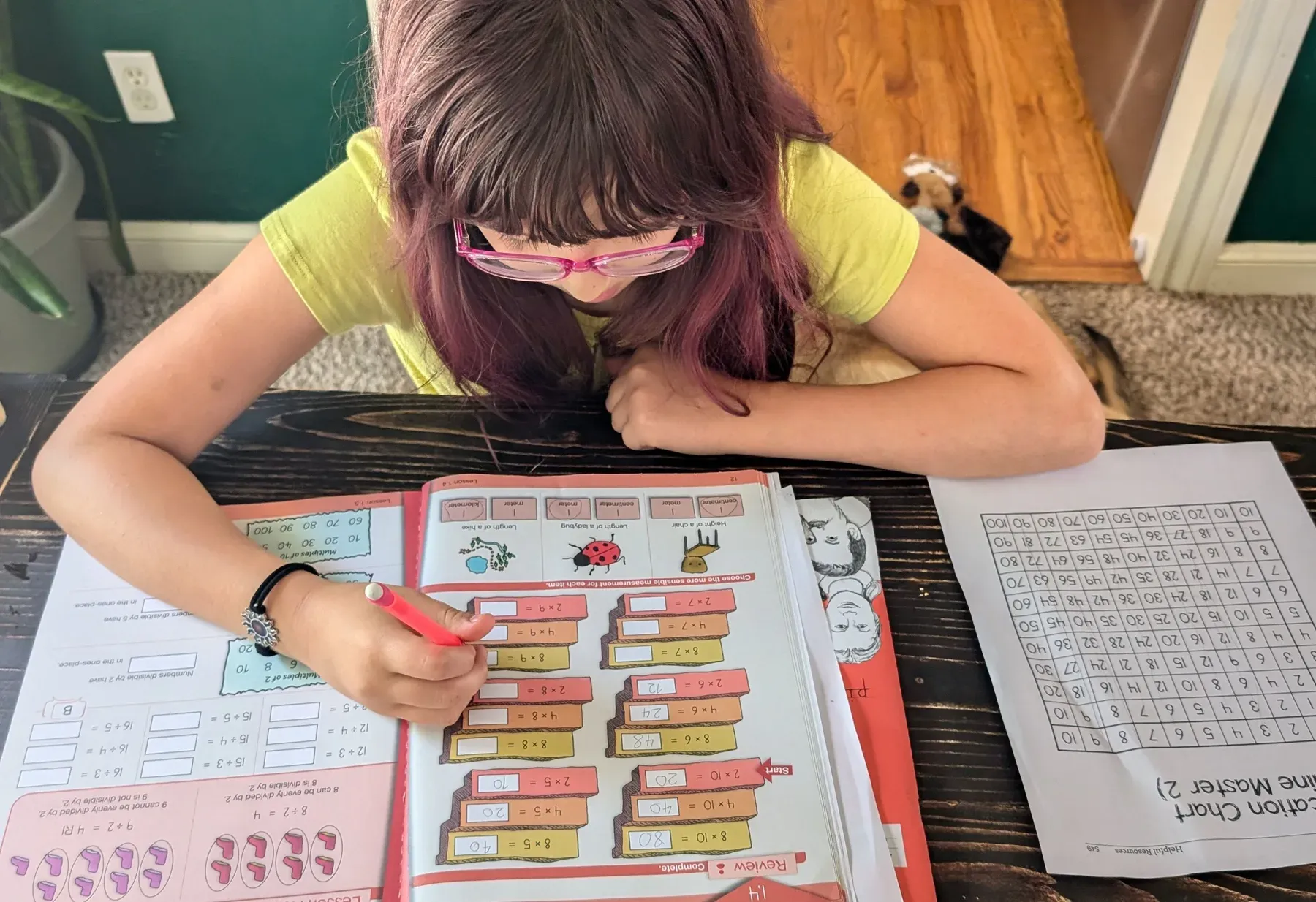
Math with Confidence is a fantastic math curriculum! It currently has curriculum textbooks for kindergarten through sixth grade. We have used the fourth grade and kindergarten Math with Confidence Curriculum for our dragons and love it. It is very parent-friendly and details everything for parents with prompts to explain sections and more. If you are looking for a math curriculum that will boost your kid’s confidence and make teaching math easier, this could be your new favorite math resource!
Oak Meadow K-12 Curriculum:
Oak Meadow curriculum is for Pre-K through High School grade students. At first sight, the books are similar to those you might see in a public school classroom. Oak Meadow covers science, social studies, English, math, fine arts, and health/physical education. Oak Meadow is on the more expensive side of curriculums. It is incredibly comprehensive, offering textbooks for every subject, book packs, craft kits, and lesson supplies to educate your child thoroughly.
Pandia Press:
Pandia Press offers Science and History Curricula. Their history curricula present “religious beliefs from that period not as factual accounts, but as relevant sources and perspectives to be considered through a historical lens.” Additionally, their science curricula are not influenced by religion. “All REAL Science Odyssey courses are secular and based on valid, empirical science.”
Moving Beyond the Page:
The Moving Beyond the Page preschool and kindergarten through middle school curriculum starts with state and national standards to ensure your child learns essential skills and content in math, language arts, writing, science, social studies, and history. It engages students at challenging and rewarding levels by differentiating the curriculum, catering to various learning styles and strengths through the multiple intelligences approach.
There is an emphasis on critical and creative thinking, encouraging deep exploration and creativity daily. The curriculum is project-based, promoting the real-world application of skills across subjects like math, reading, and science.
Handwriting without Tears
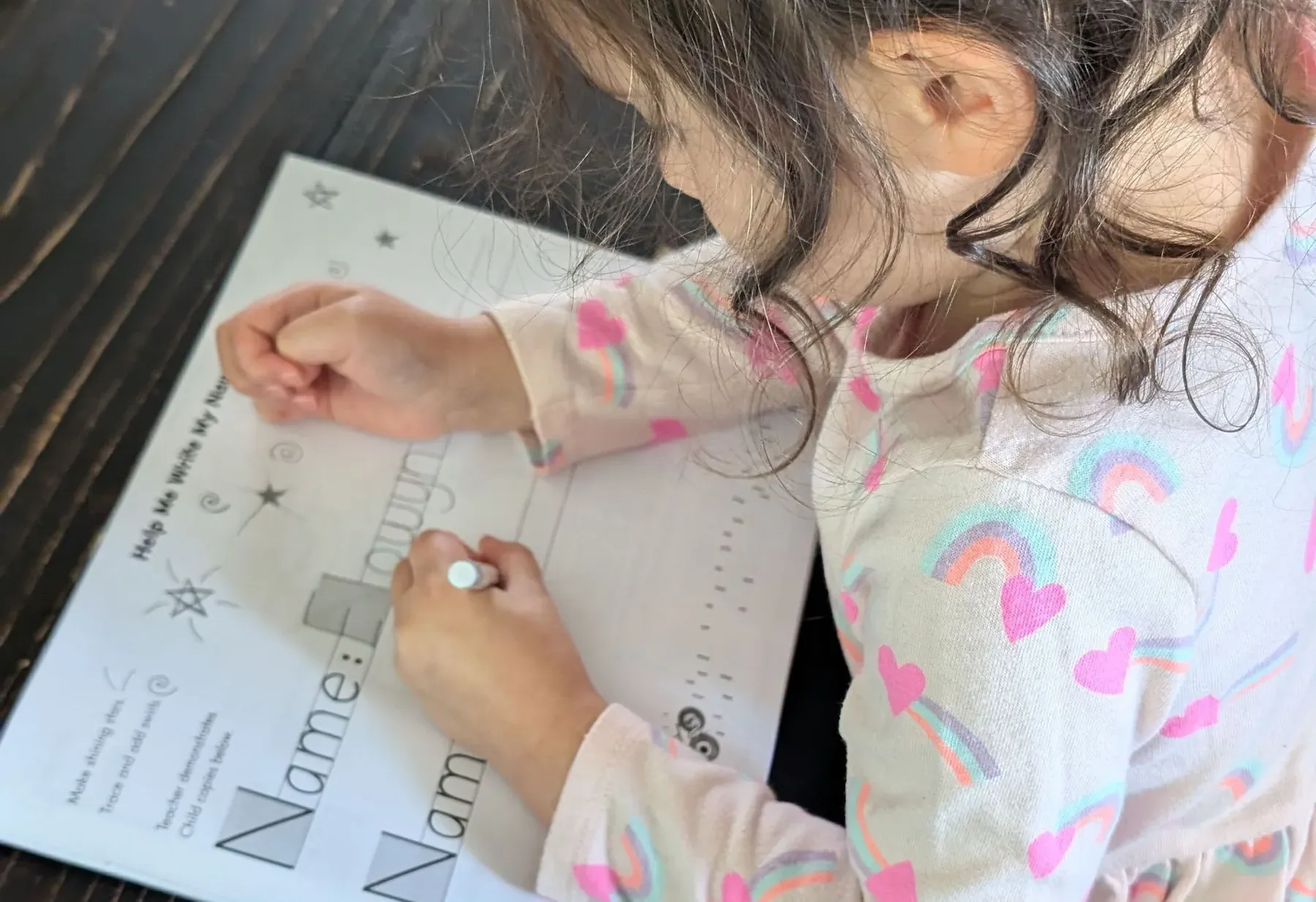
Handwriting without Tears is a handwriting PreK through sixth grade curriculum based off of the science behind learning to write. We just started using this curriculum this year and have enjoyed it so far! Our fourth grader is using their cursive curriculum and our Prekindergarten kiddo is using the kindergarten curriculm.
Supplementary Secular Resources and Tools
Online Secular educational platforms, games, and apps
-
Khan Academy has over 10,000 video lessons teaching various academic subjects, including mathematics, sciences, literature, history, and computer science. All resources are available for free to users of the website and application.
-
IXL provides comprehensive kindergarten through twelfth-grade curriculums along with Spanish, ACT, and SAT prep.
-
Prodigy is a favorite for our kids! It combines math and English practice with gaming, similar to Pokemon games. The parent dashboard has in-depth breakdowns, including details on what your kid is struggling or excelling at, along with additional resources to work on problem areas. You can also send prizes when kids meet their goals!
-
Math Seeds & Reading Eggs is an online math and reading curriculum we have used for several years for all of our children. Mathseeds teaches students in grades kindergarten through third grade the core math and problem-solving skills needed to be successful at school through fun, highly interactive, and rewarding lessons. Reading Eggs is geared towards kids aged 7 to 13 with essential reading, comprehension, vocabulary, spelling, and grammar skills.
-
BrainPop -Our fourth grader amd sixth grader are big fans of Brainpop! BrainPOP At Home includes fun, engaging movies, quizzes, and activities that build background knowledge and vocabulary.
-
Amoeba Sisters Videos: These videos were a life saver for me in high school and college! Today, I our older homeschool kiddos watch them to learn about science in funny, entertaining videos that break down complex ideas into easier to understand concepts.
Secular homeschooling communities and forums
Getting involved in local secular homeschooling co-ops was a big help for our family. You should search Facebook and Google for local co-ops in your area that your family can join. Our family is a part of two active co-ops, one that does classes each week and another that plans field trips.
Provide your child with an Inclusive, Well-rounded education through the Secular Homeschool curriculum.
Choosing the right secular homeschool curriculum is an important first step in providing your children with an inclusive, well-rounded, and unbiased education. Secular curriculums prepare students to navigate and understand a diverse and interconnected world by focusing on critical thinking, scientific inquiry, and cultural sensitivity.
The benefits of secular homeschooling include flexibility in teaching, the ability to cover diverse subjects comprehensively, and the promotion of an inclusive learning environment free from religious bias.
As you embark on your homeschooling journey, I encourage you to explore the various secular curriculums available and select the one that best fits your family’s educational goals and needs. Consider factors such as accreditation, content comprehensiveness, adaptability, and the availability of resources and support.
Remember, the right curriculum can significantly improve your child’s educational experience and overall development. We hope this guide has provided valuable insights to help you make an informed decision. We invite you to share your experiences and questions in the comments below, fostering a supportive community for all homeschooling families. Happy homeschooling!