What Do Bees Eat? A Beekeeping Family's Guide
 By Jenni Sekine
Heads up: this post contains affiliate links. If you buy through them we may earn a small commission, at no extra cost to you. As an Amazon Associate we earn from qualifying purchases.
In this guide
- A honey bee’s menu at a glance
- Nectar and honey: a bee’s energy food
- Pollen and bee bread: a bee’s protein
- Royal jelly: what baby bees (and the queen) eat
- Do bees drink water?
- What do bees eat in winter?
- What our bees eat here on the homestead
- What can you feed your bees? (What we feed ours)
- Kids’ corner: a “bee menu” nature study
- What do bees eat? FAQ
- Every flower is a bee’s grocery store
- Sources
Quick answer: Honey bees eat two main foods from flowers: nectar for energy and pollen for protein. They turn nectar into honey and pack pollen into bee bread to store for later. Nurse bees feed baby bees (larvae) royal jelly, and only a future queen eats royal jelly her whole life. Bees also need water, though it isn’t food.
Every morning, Bryan and I drink our coffee and watch our bees wake up and head out for the day. Once you start keeping bees, you notice everything they land on. Our little dragons also have a million questions about what the bees are up to and why.
So let’s geek out about it. Here’s what honey bees eat, how they turn flowers into food, and what we feed our own hive when nature needs a little help. (New here? Start with our Beekeeping for Beginners guide for the story of how we got our bees.)
A honey bee’s menu at a glance
| Food | Where it comes from | What it does for bees | Who eats it |
|---|---|---|---|
| Nectar | Flowers | Sugar for energy | Adult bees |
| Honey | Nectar the bees process and store | Stored energy for winter and rainy days | Adult bees |
| Pollen | Flowers | Protein, fat, vitamins, and minerals | Nurse bees and older larvae |
| Bee bread | Pollen packed and stored in comb | Their main stored protein | Nurse bees |
| Royal jelly | Made by young nurse bees | Super-rich baby food | Young larvae and the queen |
| Water | Puddles, ponds, and your water dish | Drinking, cooling the hive, thinning honey for brood | The whole colony |
Nectar and honey: a bee’s energy food
Nectar is the sweet liquid flowers make to attract pollinators. For bees, it’s pure fuel: sugar that powers every flight, every wing beat, and all the work inside the hive.
Forager bees sip nectar and carry it home in a special “honey stomach.” Back at the hive, the bees process it and store it in wax cells, where it slowly thickens into honey.
Do bees eat their own honey?
Yes! Honey is the colony’s pantry. Bees eat stored honey whenever fresh nectar is hard to find: at night, during rainy stretches, and all winter long. That’s why they work so hard all summer: they’re stocking up for the cold months.
It’s also why we chose not to harvest any honey in our first year. A new colony needs every drop to build comb and survive winter. Our bees earned it!
Pollen and bee bread: a bee’s protein
If nectar is a bee’s energy drink, pollen is its protein shake. Pollen gives bees protein, fat, vitamins, and minerals, and different flowers offer different nutrients. That’s why a garden with lots of different blooms makes for healthier bees.
Have you ever seen a bee with bright yellow or orange “saddlebags” on its back legs? That’s pollen! Forager bees pack it into little baskets on their legs and fly it home.
Do bees eat pollen?
Yes, but mostly the young nurse bees, plus the larvae. Most of the pollen a colony collects goes toward feeding the babies. And it adds up: a single honey bee colony can gather about 40 pounds of pollen in a year, along with roughly 265 pounds of nectar.
What is bee bread?
Here’s a fun fact. Bees don’t just stash pollen as-is. They pack it into comb cells, mixed with a little honey, nectar, and their own saliva, and it ferments, kind of like how we make sourdough or sauerkraut. The result is called bee bread.
Bees actually prefer bee bread over fresh pollen, and it’s their main protein source. Nurse bees eat it to power the glands that make royal jelly, which brings us to the babies.
Royal jelly: what baby bees (and the queen) eat
Royal jelly is a rich, milky food that young nurse bees make in glands in their heads. It’s the baby food of the bee world.
What do baby bees eat?
- All larvae start on royal jelly. For about their first three days, worker, drone, and queen larvae all get this super-rich food.
- Workers and drones then switch to a diet of pollen and nectar (or honey).
- A future queen keeps getting royal jelly, and lots more of it.
What do queen bees eat?
The queen eats royal jelly her whole life. Here’s the wildest part: a queen starts out as the very same kind of egg as a worker bee. What makes her a queen is what she’s fed. A young larva raised in a special queen cell on a royal jelly diet grows into a queen instead of a worker.
As an adult, the queen doesn’t forage at all. Her workers feed her royal jelly so she has the energy to lay eggs all season.
Do bees drink water?
They sure do! Water isn’t food, but a colony can’t live without it. Bees use water to:
- Drink, just like us!
- Cool the hive on hot days by spreading droplets on the comb and fanning their wings, like a built-in swamp cooler.
- Thin out stored honey so nurse bees can feed it to the brood.
Bees will fly far to find water, and they aren’t picky about where. That’s how they end up at birdbaths, dripping hoses, and the neighbor’s pool. If you keep bees, set out a shallow water dish with rocks or floating wood as landing spots, so they have a safe place to drink close to home.
What do bees eat in winter?
Honey bees don’t hibernate. In winter, they huddle together in a tight ball called a winter cluster, shivering their flight muscles to make heat and keep the queen warm. All that shivering burns a lot of fuel, and their fuel is the honey they stored all summer. A colony can eat more than two pounds of honey a week through the winter.
If a colony runs low, beekeepers can step in. Many use thick 2:1 sugar syrup in the fall, and solid fondant or sugar bricks in cold weather, when liquid syrup is too chilly for bees to take.
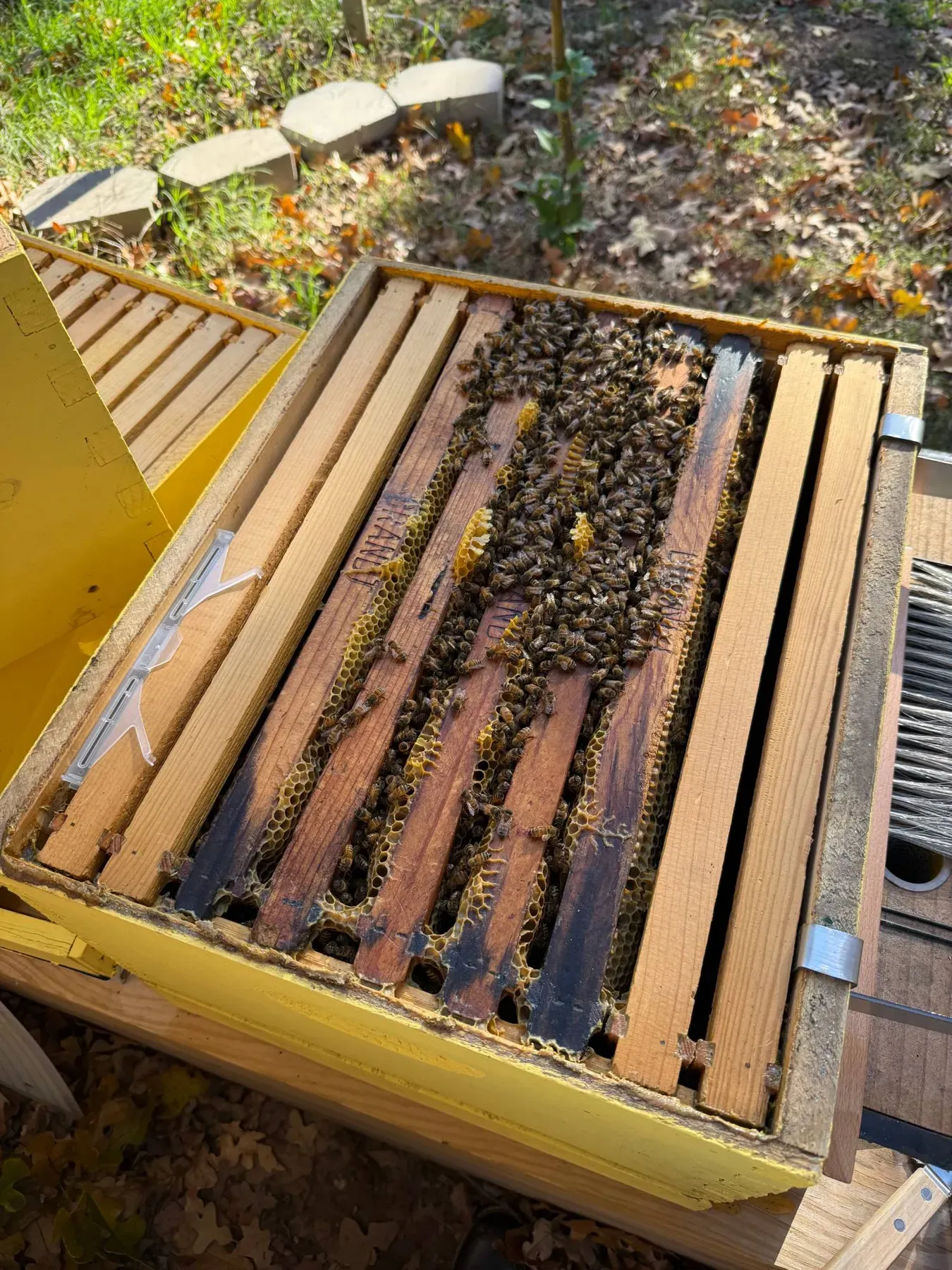
Here in Oklahoma, once daily temperatures drop below 50°F, we wrap our hive to help our Carniolans stay cozy. We plan to add another pollen patty when we wrap it up for the winter to make sure our girls have enough fuel to stay warm.
What our bees eat here on the homestead
When we decided to bring bees home, I wanted to make sure they’d have a buffet right outside their front door. So I planted a ton of flowers around our property, mixing native wildflowers with other bee-friendly favorites. My goal was simple: blossoms for as much of the year as possible, especially in the fall, when food gets scarce.
Here’s what’s on our bees’ daily menu:
- Fruit trees: our apple and peach trees, for a big spring bloom
- Native wildflowers: Echinacea (coneflower), black-eyed Susans, and milkweed
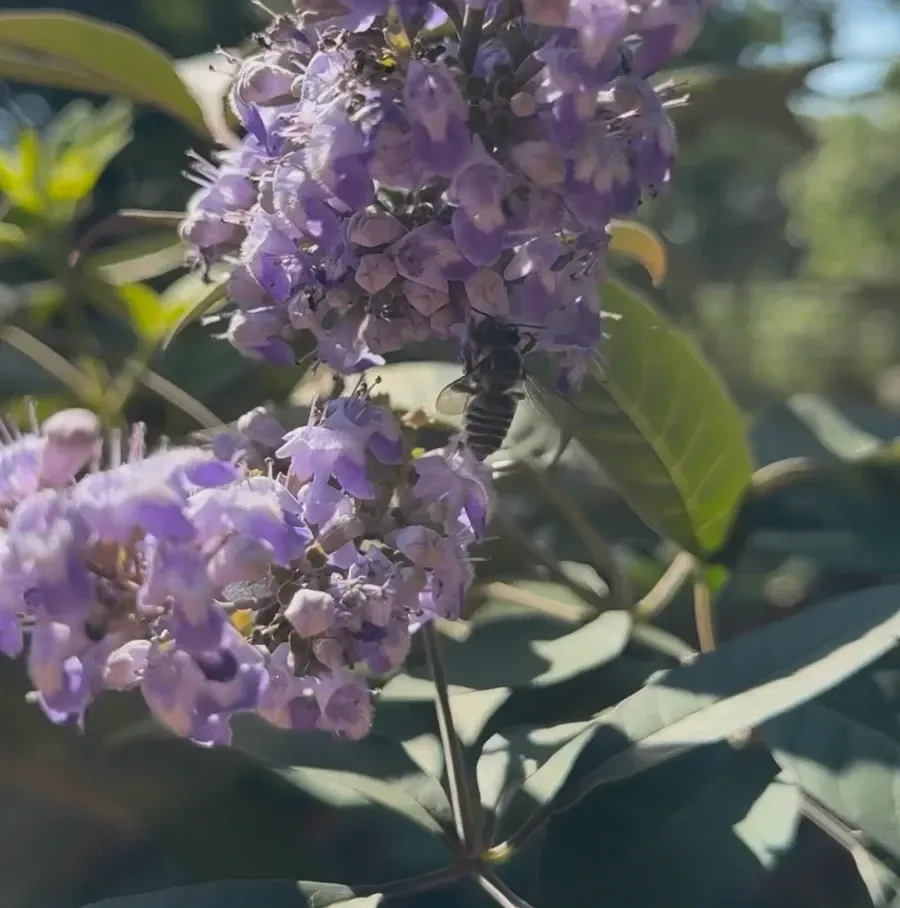
- Shrubs and small trees: chaste trees and elderberry
- Herbs and garden flowers: Tulsi (holy basil), snapdragons, sage, and fairy roses
- And more!
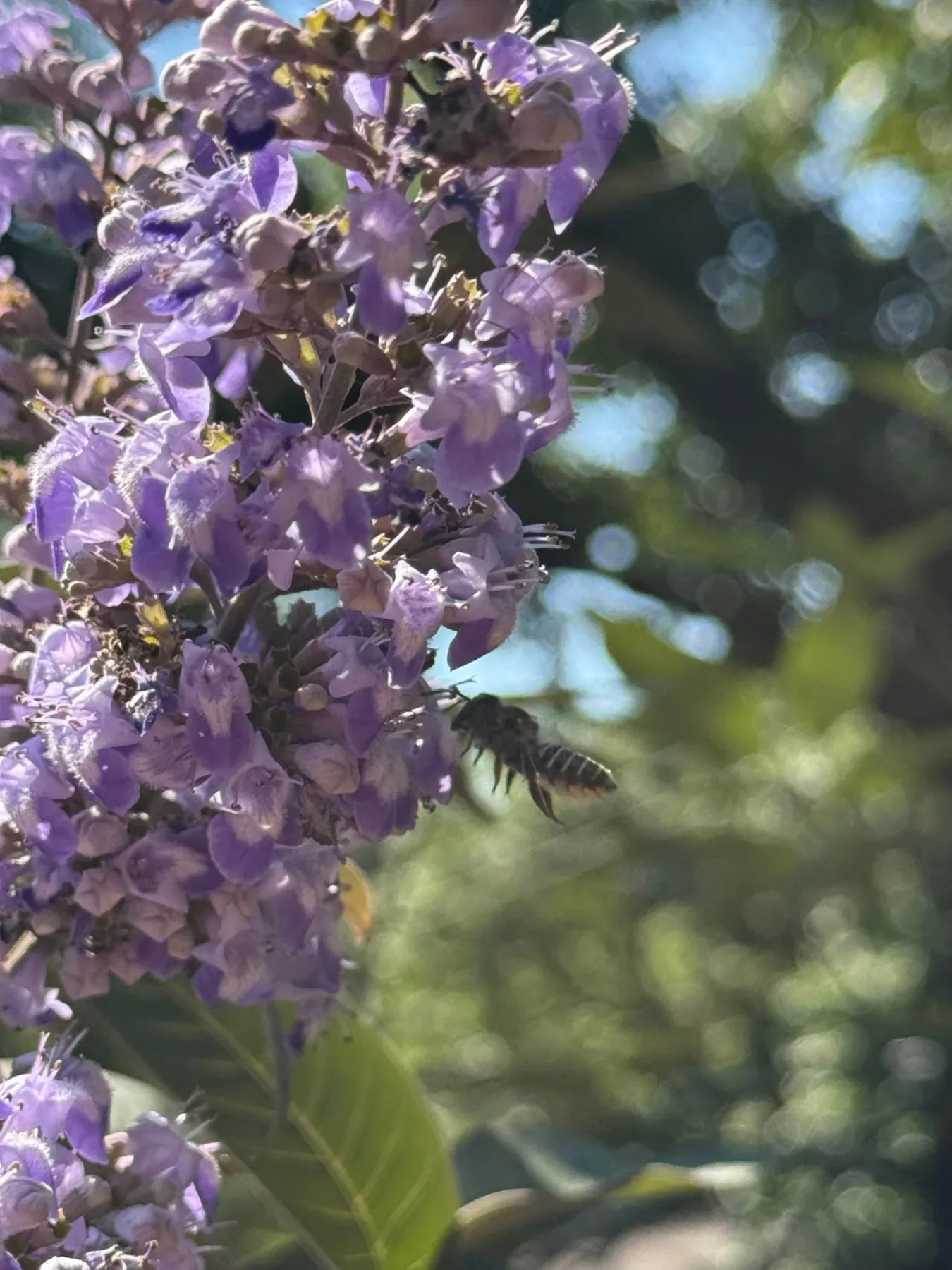
A bee coming in for a landing on our chaste tree blossoms.
Right now, in late November, our bees are still out and about on warm days. Their favorite stops are our Tulsi plants and the fairy roses. It makes my heart so happy to watch them working those last blooms of the year before they settle in for winter.
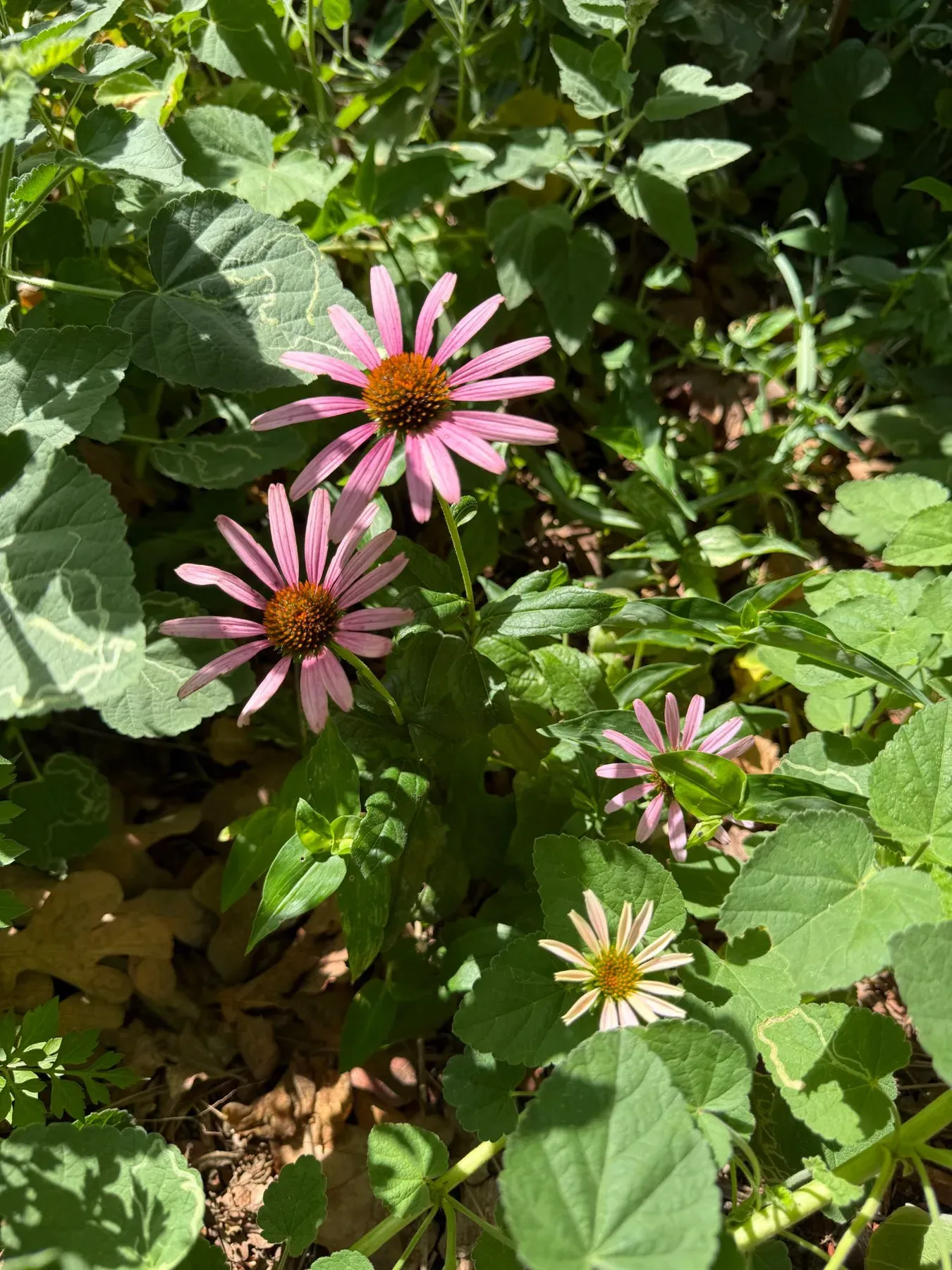
Echinacea (purple coneflower), one of the native wildflowers I planted for our bees.
My tip: Plan your garden by season, not just by flower. Bees need food from the first spring blossoms all the way to the last fall flowers, so fill in any gaps in your bloom calendar.
What can you feed your bees? (What we feed ours)
In a perfect world, bees get everything they need from flowers. But new colonies, early spring, dry spells, and late fall can leave them short. That’s when beekeepers help out with two things: sugar syrup (in place of nectar) and pollen patties (in place of pollen).
Sugar syrup
We feed our girls sugar water in an in-hive feeder. The general rule of thumb:
- Spring: thin 1:1 syrup (equal parts sugar and water) to mimic a nectar flow
- Fall: thick 2:1 syrup (two parts sugar to one part water) to help them store food for winter
Use only plain white granulated cane sugar. Never use organic, brown, or raw sugar, molasses, or corn syrup, which can upset bees’ digestion.
Pollen patties
When we brought our nuc home, we also bought pollen patties and set them right in the hive. A brand-new colony has a lot of babies to raise, and babies need protein. Pollen patties give bees carbohydrates, protein, and fat all at once, which helps a young colony build its population faster.
How we keep an eye on their food
Inspections are how you check whether your bees have enough to eat. We don’t want to disturb them too often, so we checked our bees about nine days after we brought them home, then about once a month. Each time, we look for stored honey and pollen, plus eggs and young brood that tell us the queen is busy.
Want the full story of our first year, including install day and what it all cost? Read Beekeeping for Beginners: What Our First Year Taught Us.
Kids’ corner: a “bee menu” nature study
Bees make a fantastic homeschool science unit, and you don’t need a hive to try this one. All you need is a sunny garden, park, or flower bed and a notebook.
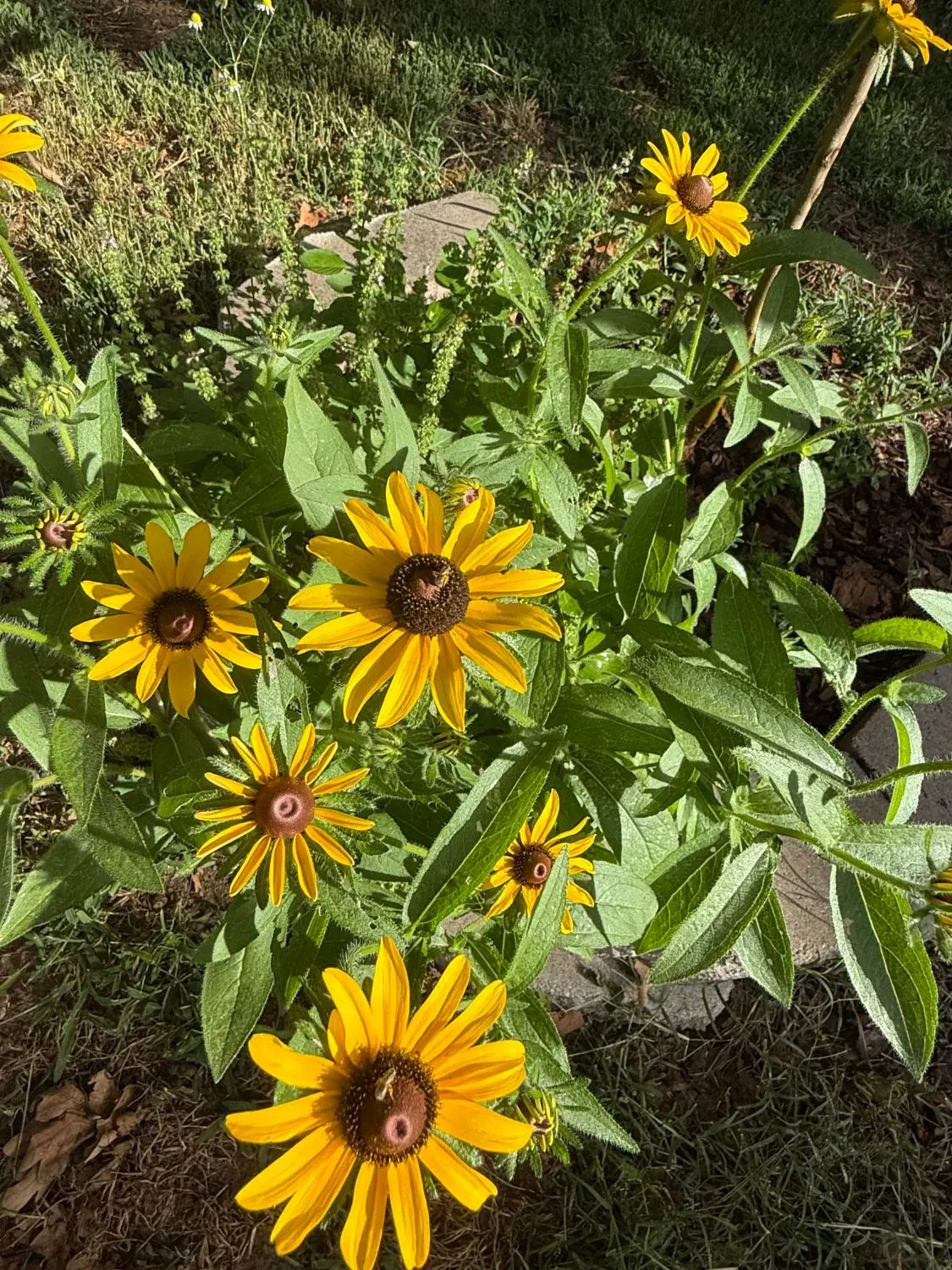
Can you spot the bees? Two of them are busy on these black-eyed Susans.
- On a warm, sunny day, find a flowering patch and watch from a few feet away. (Bees are busy, not mean, but give them space!)
- Watch for 10 minutes. Which flowers get the most bee visits? Draw or name them.
- Look at their legs. Can you spot bees carrying pollen “saddlebags”? What colors do you see?
- Sort the menu. Back home, make two columns, Energy (nectar) and Protein (pollen), and talk about why bees need both.
- Bonus discussion: How is bee bread like sourdough? Why does only the queen eat royal jelly her whole life?
What do bees eat? FAQ
What is a bee’s favorite food?
Nectar is the food bees go after most, because it gives them the sugar they need for energy. But they need pollen too, so a healthy bee “diet” is a mix of both, from lots of different flowers.
Do bees eat their own honey?
Yes. Honey is stored food that bees eat when nectar is scarce, especially at night, during bad weather, and all winter.
What do bees eat besides honey?
Nectar, pollen, and bee bread (fermented, stored pollen). Larvae and the queen also eat royal jelly made by nurse bees.
What do honey bees eat for food?
Nectar for energy and pollen for protein, fat, vitamins, and minerals. They store these as honey and bee bread.
What can you feed your bees?
Beekeepers usually feed plain white sugar syrup (1:1 in spring, 2:1 in fall) and pollen patties when natural food is short. In cold weather, solid fondant or sugar bricks work better than syrup.
What do queen bees eat?
Royal jelly, for her whole life. Worker bees make it and feed it to her.
Do bees eat meat?
Honey bees don’t. They’re vegetarians that live on nectar and pollen. (A few rare tropical species, nicknamed vulture bees, are the exception.)
Do bees hibernate?
No. Honey bees cluster together in winter, shiver to stay warm, and eat their stored honey until spring.
Every flower is a bee’s grocery store
Once you know what bees eat, you’ll never look at a flower bed the same way. Every bloom is a stop on their grocery run: nectar for energy, pollen for protein, and all of it carried home to feed the colony.
Want to help your local bees? Plant a mix of flowers that bloom from spring to fall (like the native wildflowers and herbs our bees love), skip the pesticides when you can, and set out a shallow dish of water. And if you’re dreaming of a hive of your own, our Beekeeping for Beginners guide walks you through our first year.
What’s blooming in your yard that the bees love? Tell me in the comments!
Keep reading:
- Beekeeping for Beginners: What Our First Year Taught Us
- Where Do Bees Go in the Winter? (coming soon)
- How Do Bees Make Honey? A Kids’ Guide (coming soon)
Sources
- What Do Bees Eat? – Utah State University Extension
- Do bees feed on both nectar and pollen? – USGS
- Bee Pollen and Bee Bread – Best Bees
- Longevity extension of worker honey bees by royal jelly – PeerJ (2017)
- Hive temperature – PBS NOVA
- The Water Girls – UC Agriculture and Natural Resources
- Honey Bee Nutrition – University of Tennessee Extension